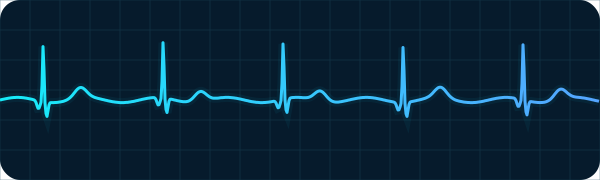
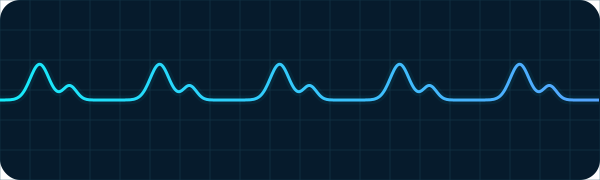
AFib-like irregularity
Investigating irregular rhythm patterns that may be consistent with atrial fibrillation.
The initial research focus is on rhythm-related patterns. These are research targets, not currently demonstrated diagnostic capabilities.
Investigating irregular rhythm patterns that may be consistent with atrial fibrillation.
Investigating unusually fast heart rates and changes from personal baselines.
Investigating unusually slow heart rates and relevant trends.
Exploring selected premature beats, pauses and rhythm abnormalities if signal quality and evidence permit.
A ring cannot reliably diagnose a heart attack from these signals alone; broader warning-pattern research is speculative.
Sudden loss-of-circulation detection and emergency alerting would require substantial clinical and system validation.
Clinical sensitivity, specificity, false-alarm performance, safety, and regulatory pathway have not been established. The presence of a sensor or an AI model does not establish diagnostic accuracy.
Cardio AI Ring is an experimental research-stage concept. It is not clinically validated to diagnose or predict cardiac conditions, is not FDA-cleared, and must not be relied on for medical decisions or emergency monitoring.